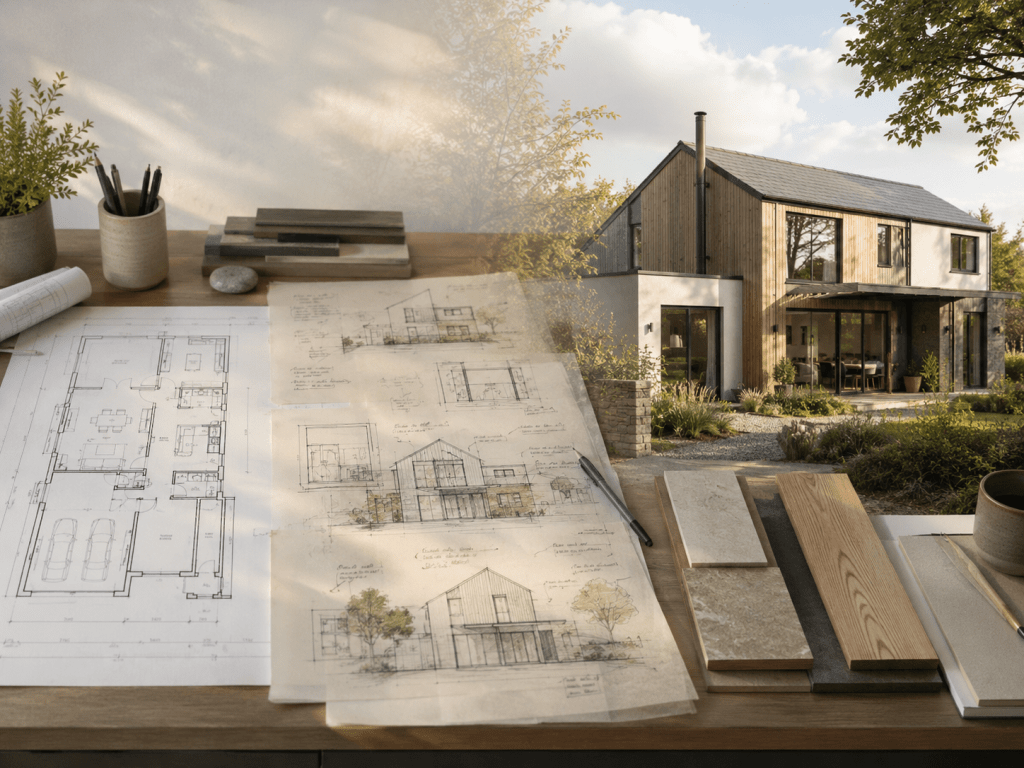
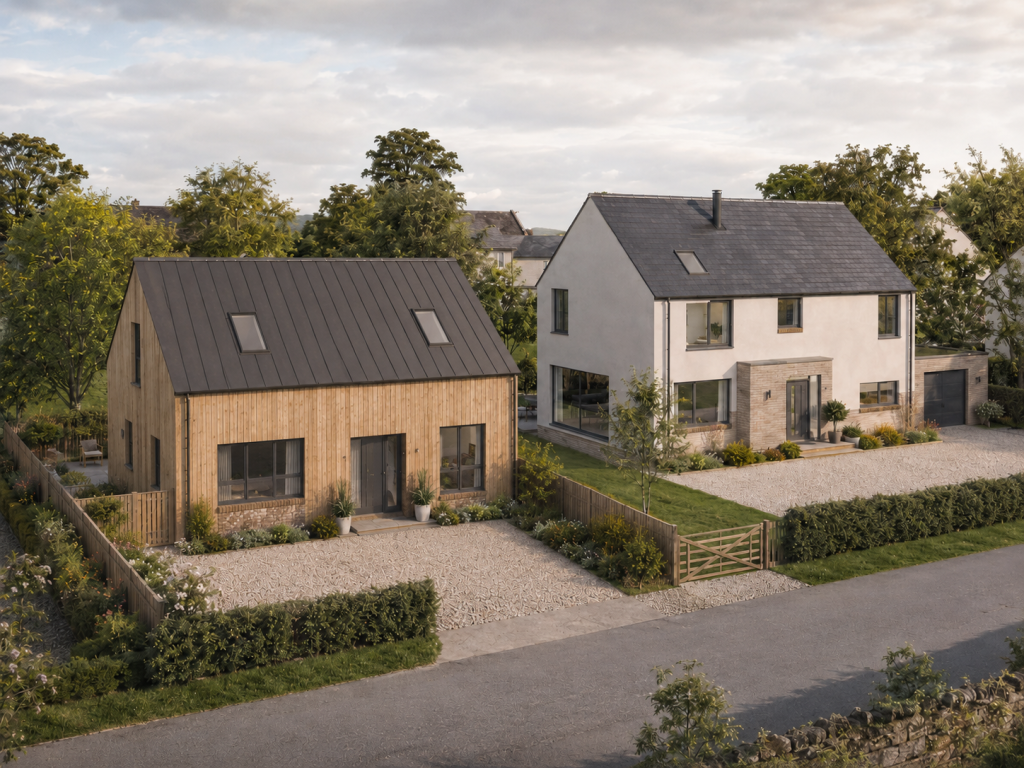
One of the most important — and often underestimated — parts of a self-build project is creating a clear design brief.
Whether you are commissioning a fully bespoke design or adapting an existing house plan, the quality of the brief will have a direct impact on how smoothly the project progresses.
In our experience, many of the challenges that arise later can be traced back to a lack of clarity at the outset.
What is a self build design brief?
A design brief is simply a structured way of defining what you want to achieve from your new home.
It brings together:
- how you want to live
- what spaces you need
- your budget
- your priorities
It does not need to be overly technical, but it does need to be clear.
Starting from scratch vs starting from a plan
There are two common approaches to self-build design:
1. Starting from scratch
This involves developing a completely bespoke design tailored to a specific site and set of requirements.
2. Starting from an existing plan
This involves selecting a proven design and adapting it to suit your needs and your plot.
Both approaches can work well. The key is understanding how the brief fits into each.
The core elements of a good self build design brief
Regardless of the approach, a strong design brief should address:
1. Lifestyle and priorities
How do you want to use the house on a day-to-day basis?
2. Space requirements
How many bedrooms?
Open-plan or more defined spaces?
Future flexibility (maybe with the Lifetime Homes Standards in mind)?
3. Budget
What is the realistic overall budget, and how does that influence size and specification?
4. Site considerations
What are the opportunities and constraints of the plot?
5. Non-negotiables vs preferences
What must the design include, and where is there flexibility?
Briefing a bespoke design
When starting from scratch, the brief acts as the foundation for the entire design process.
Clarity at this stage helps to:
- reduce redesign
- improve efficiency
- keep the project aligned with budget
Without a clear brief, it is easy for the design to evolve in ways that introduce unnecessary complexity.
Briefing from an existing design
When working from an existing house plan, the process is slightly different.
Rather than starting with a blank sheet, you are:
- selecting a design that already aligns broadly with your needs
- identifying where adjustments are required
- refining the layout to suit your plot and preferences
In many cases, this can provide a more efficient starting point.
It also helps ground decisions in something tangible, rather than purely theoretical.
Where things often go wrong
The most common issues we see are:
- trying to include too many competing ideas
- not aligning the brief with the budget
- making decisions without reference to the plot
- treating preferences as non-negotiables
These can all lead to unnecessary iteration later in the process.
A practical way to approach it
A useful way to structure your brief is to:
- Define how you want to live
- Translate that into space requirements
- Align those requirements with budget
- Consider how they relate to your site
- Refine priorities
Whether you are starting from scratch or adapting a plan, this sequence tends to produce better outcomes.
Final thoughts
A clear self build design brief does not restrict creativity — it supports it.
It provides a framework for making decisions, helps keep projects aligned with their objectives, and reduces the likelihood of costly changes later on.
And in many cases, starting from a well-considered existing design can make that process simpler and more predictable.