If you’ve been researching self-build projects recently, you may have come across references to the Future Homes Standard.
It’s one of the most significant changes to residential construction in recent years, yet many prospective self-builders remain unclear about what it actually means and how it could affect their project.
The good news is that, for most self-builders, the changes are unlikely to be as dramatic as some headlines suggest.
However, they will influence how new homes are designed, heated and constructed in the years ahead.
What is the Future Homes Standard?
The Future Homes Standard is a Government initiative intended to improve the energy performance of new homes and reduce carbon emissions.
The aim is that new homes built under the standard will produce significantly lower operational carbon emissions than those constructed under previous regulations.
In practice, this means new homes will need to be designed with energy efficiency in mind from the outset.
Why is it being introduced?
The UK has committed to reducing carbon emissions and improving the energy efficiency of its building stock.
Because homes account for a significant proportion of energy use, improving the performance of new housing is seen as an important part of that strategy.
The intention is that homes built today should be fit for the future rather than requiring expensive upgrades later.
Does this mean gas boilers will be banned?
For many self-builders, this is the first question that comes to mind.
While the Future Homes Standard is not simply a “boiler ban”, it is expected to encourage a move away from fossil fuel heating systems in new homes.
As a result, technologies such as:
- air source heat pumps
- ground source heat pumps
- other low-carbon heating systems
are likely to become increasingly common.
Will I need solar panels?
Not necessarily.
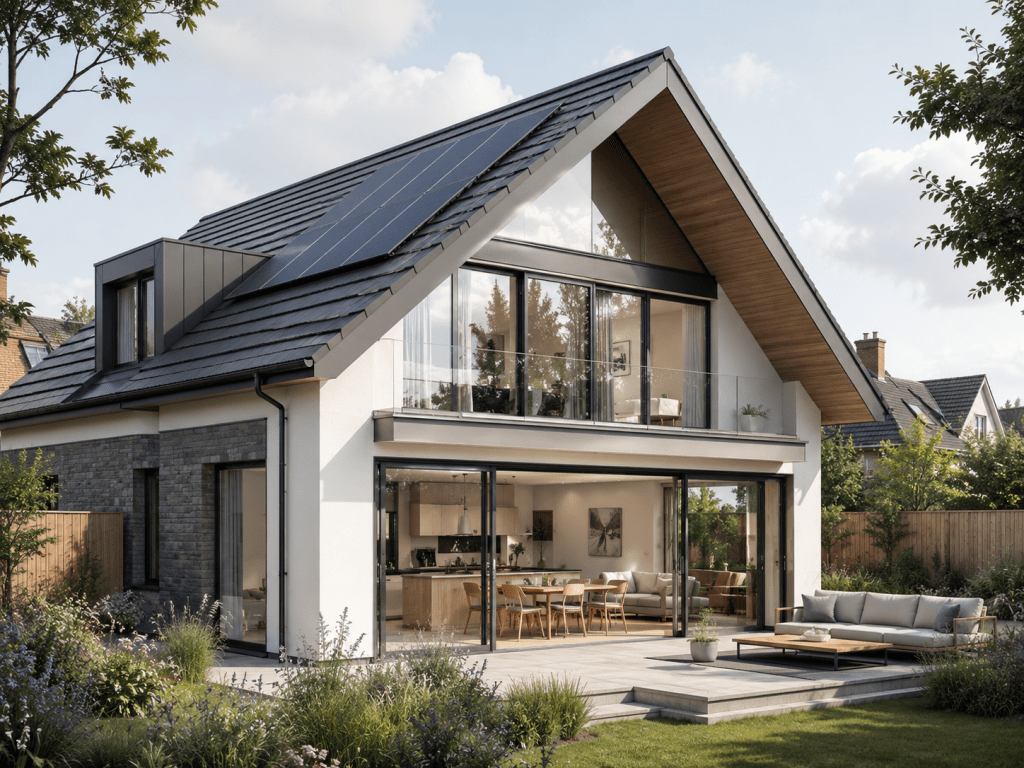
Solar photovoltaic (PV) systems are often an effective way of improving a home’s energy performance and may help demonstrate compliance.
However, the Future Homes Standard is not solely about renewable technology.
Factors such as:
- insulation levels
- airtightness
- glazing performance
- building orientation
can be just as important.
A well-designed building fabric remains the foundation of energy-efficient design.
Will it make self-builds more expensive?
There may be additional upfront costs associated with some technologies and construction methods.
However, those costs should be considered alongside potential benefits such as:
- lower energy bills
- improved comfort
- reduced future retrofit requirements
As with many aspects of construction, the focus should be on whole-life performance rather than simply initial expenditure.
Is this something self-builders should worry about?
Probably not.
Most self-build projects already aim to achieve a good level of energy performance, and many are ahead of minimum regulatory requirements.
The key point is that energy efficiency is becoming increasingly important and should be considered early in the design process rather than treated as an afterthought.
What does it mean for house design?
The Future Homes Standard is likely to encourage a more holistic approach to design.
Rather than relying on a single technology, successful homes will typically combine:
- efficient layouts
- good insulation
- appropriate glazing
- effective heating systems
- renewable technologies where appropriate
The most successful projects are likely to be those that integrate these considerations from the outset.
Final Thoughts
The Future Homes Standard represents an evolution rather than a revolution.
Most self-builders will not need to radically change their ambitions, but they should expect energy performance to play an increasingly important role in design decisions.
Ultimately, the goal is not simply regulatory compliance but creating homes that are comfortable, efficient and affordable to run for many years to come.